
The end has always been near
Right now, someone is explaining that these are the end times. That no era was ever this crazy. People have said this for as long as we've had writing. Every one of them was dead sure. Every one of them woke up the next day anyway.
We even reach for the same proof every time. You know the one. Kids these days love luxury, they have terrible manners and no respect for authority. It gets pinned on Socrates. Socrates never said it. A student made it up in 1907, summing up the way old people have always groused about the young, and within fifteen years a newspaper slapped Socrates's name on it. The most popular proof that today's kids are uniquely rotten is a fake. The complaint it's copying is real, and about 2,700 years old.

The doomsday almanac
interactiveEvery one of these was, for someone entirely sincere, the certain end of the world. Tap any year.
Somewhere today, by someone entirely sincere, a thirteenth is being calculated.
You feel with the same kit as everyone who ever lived
The wiring is old. Really old. The fear circuit that fires when a car swerves at you is almost the same one a rat has. It was built long before there were any humans around to be scared. And the full range of what a person can feel got handed out, unchanged, to the pharaohs and to you.
For four hundred years, people have tried to list the basic feelings, and they keep landing on a tiny number. Descartes counted six. Spinoza got it down to three. Scientists today think the base is just two dials: good or bad, and calm or worked up. Everything else gets built on top of those, in the moment. Nobody agrees on the exact count, and that's the honest catch. What nobody disputes is that the set is small, it's ancient, and every person who ever lived was issued the same one.
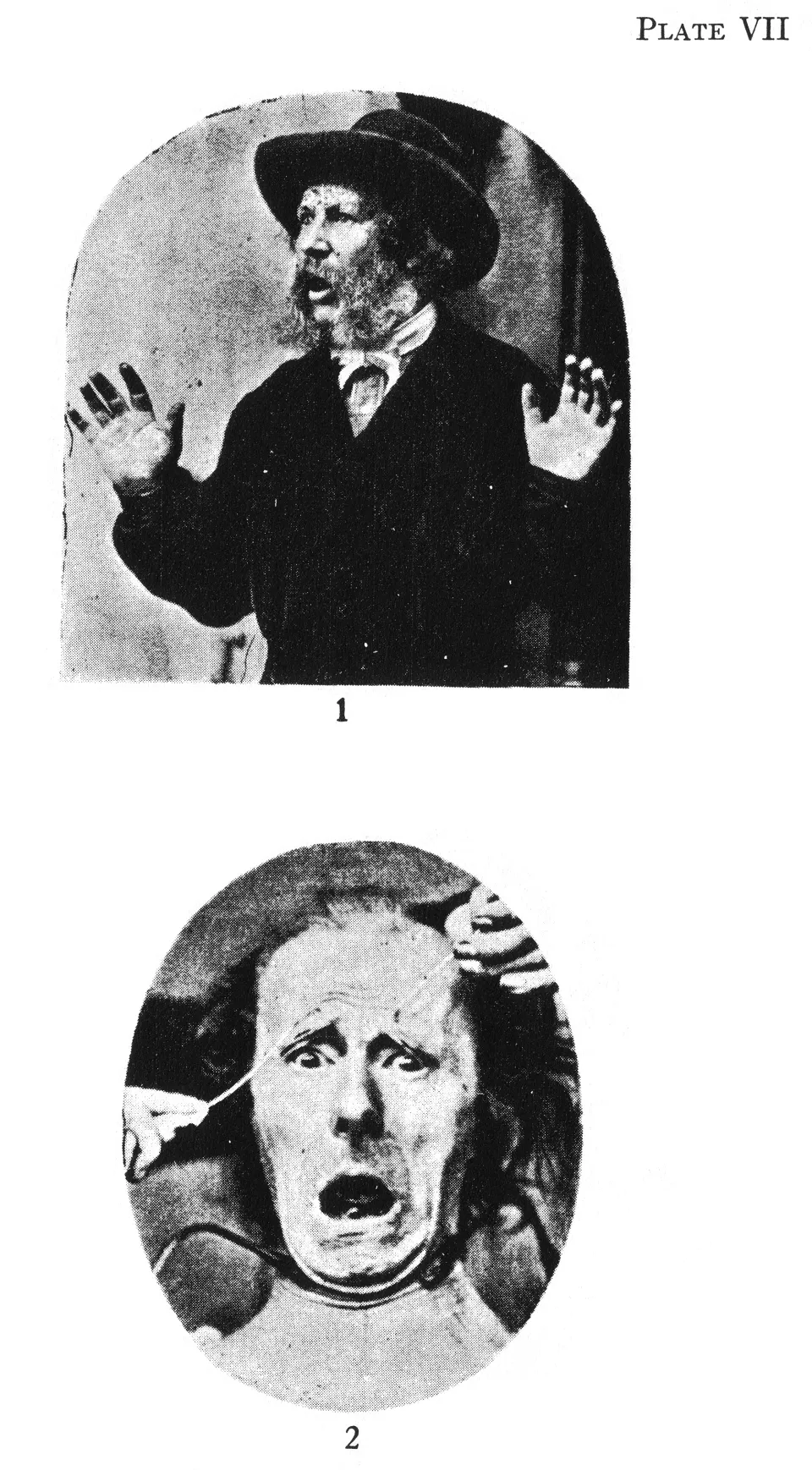
The two dials
interactiveDrag the dot, or tap a feeling. Wherever you land is just a spot on two dials: how good or bad it feels, and how stirred up or calm.
content
Every name you know is a pin in this one square. The kit is two dials. The words are just how your language chose to cut it up.
And you slide back to where you started
Win the lottery, and a year or two later you're about as happy as you were before. You even enjoy small treats a little less. Lose the use of your legs, and slowly, never all the way, you climb back to most of where you were. Whatever happens to you, there's a pull back toward normal, and it never really lets go.
The treadmill
interactivePick something life-changing, and watch what your happiness does over the ten years after.
The billionaire and the herder come out even
Ask the 400 richest Americans how happy they are with their lives, on a scale of one to seven. They say 5.8. Now ask the Maasai in East Africa, who herd cattle, live in homes made of dung, and have no electricity or running water. They say 5.7.
The richest people alive and a people with almost nothing come out a tenth of a point apart. Money comes in a range so huge it's hard to picture. Happiness comes in a tiny one. Whatever all that money is buying, it mostly isn't this.
Wealth against feeling
interactiveDrag your fortune from almost nothing to the richest people alive, and watch your own rating of your life.
Two things are handed to you. One is not.
Take a life apart and most of it comes down to two things you never picked. The genes you were born with, and the home you grew up in. Together they explain a lot, maybe half of your basic mood and a good chunk of the rest. But they don't add up to the whole thing. There's a third piece.
Your genes and your upbringing are set before you get a vote, and they explain a lot. The third dial, how much you turn toward other people instead of yourself, is the one you can still move. The next part is why it matters so much more than you'd expect.
The first two are locked in before you get a say. The third is the only part you actually control, and it turns out to be the part that changes how you feel the most. Not your circumstances, which you just get used to. The one thing that keeps paying off is how you treat other people.
The one lever you actually hold
Of everything inside you, the one part you can actually move is which way you're facing. Toward yourself, or toward everyone else. And out of every lever scientists have tested, this is the one that keeps winning.
The longest study of human life ever run has followed people for more than 85 years. Its clearest finding is not money, or fame, or cholesterol. It's that the warmth of your relationships, more than anything else they measured, predicts how healthy and happy you'll be at the end of your life. Loneliness is about as bad for you as smoking 15 cigarettes a day.
And the thing the old traditions always insisted on turns out to be true. People who volunteer live longer, but only if they do it for other people. Do it to feel good about yourself and the benefit disappears. Alcoholics Anonymous said it in one line back in 1939, long before any data backed it up: selfishness is the root of our trouble. The fix was to be of service. But if you give to get something back, it doesn't work. You have to actually mean it.
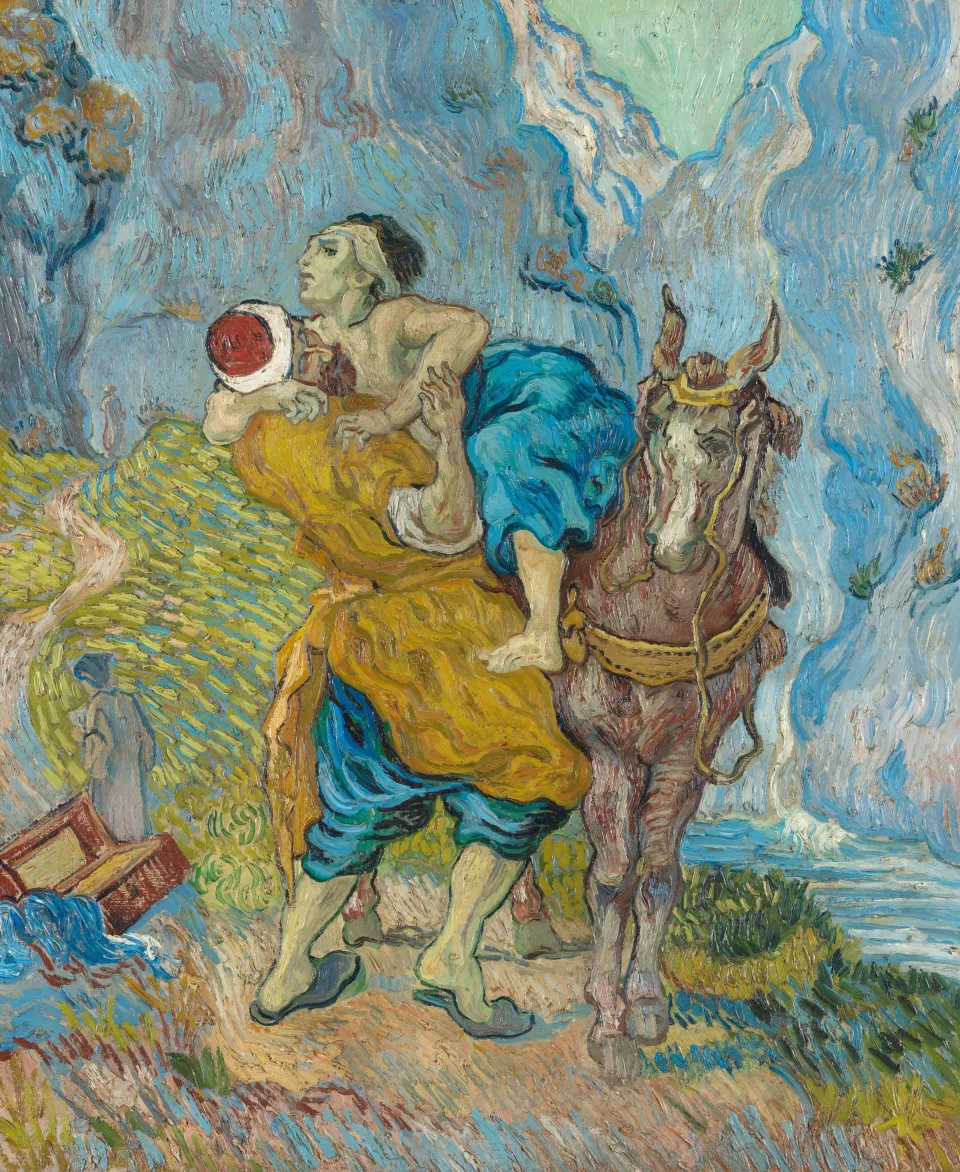
Everyone already knew the way out
Treat other people the way you want to be treated. Don't do to your neighbor what you'd hate done to you. The same line shows up, in almost the same words, in about fourteen traditions across four thousand years. It's scratched on Egyptian papyrus. It's in the mouths of the Buddha, Confucius, Hillel, and Jesus.
Nobody copied it down a chain from one person. People who never met, on every continent, kept landing on the exact same rule. The best advice we've ever come up with is also the advice we've come up with the most times. That's not a coincidence to explain away. That's just what it looks like when something is true.
One rule, many tongues
interactiveThe same instruction, found alone by people who never met, across four thousand years and three continents. Tap any tradition.
One rule, said two ways: most as “do,” a few as “do not.” They really do agree, but the wording isn't identical, and the scholar who wrote the book on it says exactly that. The small differences are half the fun.

So that's the whole thing. The doom you feel, everyone has felt it. The feelings you feel came in the same small kit everyone got, and they max out at the same ceiling for everyone. Two of the three things that made you were handed to you, the same way they're handed to everybody. As far as anyone can measure, you are equal to every human who ever lived. Nobody is having a richer time of it on the inside than you are.
Which leaves the third thing. The one lever. The one part that was ever really yours. And the instructions for it have been sitting in plain sight, in every language, the whole time. There's nothing new under the sun, including the way out.
Sources, and how to read them
Every claim here points to real research, cited where it shows up. Here's the full list, strongest evidence first in each group. Where it's one study, or mixed, or still up in the air, the text says so instead of pretending to be sure.
- The end is always near
- Quote Investigator. "The Children Now Love Luxury" is not Socrates; it traces to Kenneth John Freeman, Cambridge dissertation, 1907. quoteinvestigator.com
- Britannica. 10 failed doomsday predictions (Millerites 1844, Halley's Comet 1910, Camping 2011, and more). britannica.com
- Cohn, N. (1957). The Pursuit of the Millennium. The recurring shape of apocalyptic movements. overview
- Ord, T. (2020). The Precipice. The honest counter: genuinely novel risk since 1945. theprecipice.com
- The same instrument
- Barrett, L. F. (2017). How Emotions Are Made; core affect as valence by arousal. SCAN
- Barrett, Adolphs, et al. (2019). Emotional expressions reconsidered. Psych Sci in the Public Interest. journal
- Crivelli, et al. (2016). The fear face read as threat among the Trobrianders. PNAS. pnas.org
- LeDoux, J. (2012). Conserved survival circuits across mammals. Prog Brain Res. PMC3600914
- The treadmill and the leveling
- Brickman, Coates & Janoff-Bulman (1978). Lottery winners and accident victims. JPSP. PDF
- Diener, Lucas & Scollon (2006). Beyond the hedonic treadmill (set points can move). Am Psychologist. PDF
- Lucas, et al. (2003, 2004). Widowhood and unemployment durably lower the set point. marital / unemployment
- Diener & Seligman (2004). "Beyond Money"; Forbes 400 (5.8) vs Maasai (5.7), homeless (2.9). PSPI. PDF
- Kahneman & Deaton (2010). Income improves life evaluation but not daily mood past a point. PNAS. pnas.org
- The three things, and the lever
- Lykken & Tellegen (1996). Happiness is roughly 50 percent heritable (twins). Psych Science. journal
- Waldinger & Schulz (2023). The Good Life; Harvard Study of Adult Development. summary
- Holt-Lunstad, et al. (2010). Social connection and mortality (the "15 cigarettes" finding). PLoS Medicine. PMC2910600
- Konrath, et al. (2012). Volunteering extends life only for other-oriented motives. Health Psych. PDF
- Dunn, Aknin & Norton (2008). Spending on others raises happiness (RCT). Science. science.org
- AA (1939). "Selfishness, self-centeredness, that we think is the root of our troubles." Big Book, ch. 5. PDF
- Brown & Rohrer (2020). The honest caveat: the "40 percent" happiness pie is not sound. J Happiness Studies. Springer
- The way out, found everywhere
- Wattles, J. (1996). The Golden Rule (Oxford). The rule across traditions, with its honest differences. OUP
- Hillel; Confucius; Matthew; Nawawi; Mahabharata. Sourced cross-tradition table. overview
- Henrich, et al. (2005). Fairness in 15 small-scale societies: everywhere, but locally tuned. BBS. PubMed