

You have about 90,000 hours of work in you. That is the standard estimate for a full working life, and it is the largest block of waking time you will ever spend on any one thing. Pryce-Jones 2010
There is a dollar amount that buys most of those hours back. Below it, you work because you must. Above it, your savings earn more in an average year than you spend, and on the historical record they keep doing it for the rest of your life. Reach it once and the well refills faster than you drink from it.
This is a field guide to that threshold. The math, the climb from a normal American starting point (a car loan, a student loan, a credit card, no famous degree), the strangely gentle taxes waiting on the far side, and every catch, because a guide that skips the catches is a sales pitch. None of it takes luck or brilliance. It takes a paycheck worth saving and two boring decisions repeated for 15 to 25 years.
The Threshold
Why 25 times your spending is the line, and why the line is built on a disaster.
In 1994 a financial planner named William Bengen fed every retirement year since 1926 into one blunt question: sell a fixed, inflation-adjusted slice of a stock-and-bond portfolio every year, and how big can the slice be without going broke inside 30 years, even starting at the worst moment in a century? The answer came back just over 4 percent. Bengen 1994 A 1998 Trinity University study checked the work, and the "4% rule" was born. Trinity 1998
Flip the 4 percent over and the whole plan is one line: the threshold is 25 times your yearly spending. Spend $40,000 a year and your number is $1 million. Spend $100,000 and it is $2.5 million. Not income. Spending. The cheaper your life, the closer the line stands.
And 4 percent is not the expected case. It is the catastrophe case, calibrated to October 1968, the unluckiest retirement month in modern history. Across all the other start years the rate that would have worked averaged about 7 percent Morningstar 2025, Bengen's own 2025 revision raised even the worst case to 4.7 Bankrate 2025, and the median retiree who ran the rule for 30 years ended 2.8 times richer than the day they quit. Kitces 2019
The average over the last 100 years, believe it or not, is 7 percent.Bill Bengen, creator of the 4% rule, on the withdrawal rate history would actually have allowed
The machine itself is nothing exotic: a plain total-market index fund, roughly 10 percent a year over the last century, about 7 after inflation, with horrible decades hiding inside the average. Vanguard 2021 You spend 4 points; the rest stays in to fight inflation and absorb the bad years. One honest asterisk: people retiring for 50 years rather than 30, into expensive markets, should plan on 3.25 to 3.5 percent, which moves the line from 25 times spending to about 29. Jeske, ERN The catches section returns to this.
The Dial
The threshold is not one number. It is a dial, and you choose where it stops.
Because the number is 25 times your spending, there is no single finish line; every notch on the dial is a different life. The featured row, $2.5 million paying $100,000 a year, out-earns the median American household, which works full time for $83,730. Census 2025
| The pile | Pays yearly | Monthly | What it is |
|---|---|---|---|
| $1,000,000 | $40,000 | $3,333 | Lean. Covered, careful, no margin for a taste for boats. Top 18% of households. Roughly 1 in 6 US households is here, counting home equity. |
| $1,500,000 | $60,000 | $5,000 | Solid. A paid-off-house, normal-car version of comfort. |
| $2,500,000 | $100,000 | $8,333 | Comfortable. More than the median household earns by working. Top 8% or so of households. |
| $5,000,000 | $200,000 | $16,667 | Rich. The no-compromises version. Top 3 to 4%. |
Payouts at the 4% rule. Nervous, or retiring very young? Use 3.5% instead: multiply spending by 29 rather than 25. Percentiles from the Federal Reserve's 2022 Survey of Consumer Finances. DQYDJ / Fed SCF
Read it bottom-up and it stops being a rich-person fantasy. Every notch buys hours back: at $300,000 the portfolio quietly pays your rent, at $1 million you could shrug off a layoff, at $2.5 million the alarm clock is decorative. For scale, the median American household, home equity included, holds $192,700: about a fifth of the way up the table's first row. Fed SCF 2022
Find Your Number
Pick the income you want, see exactly what has to change to get it, and race the median American household.
Where is your line?
Drag the sliders or type straight over the numbers. Everything runs in today's dollars, so inflation is already handled. The small ▲ marks under the tracks are the US median or average for that dial, so you can see where you stand against the country as you go.
Assumptions: investments earn your chosen real return (default 5%, the long-run record with a haircut); spare dollars kill the debt first while it costs more than the return, otherwise it rides; the finish line is yearly spending times the multiple you picked. Benchmarks: median household take-home $72,330 Census 2025, average household spending $6,545 a month BLS 2024, median net worth $192,700 Fed SCF 2022, saving rate near 4.5% BEA / FRED. Method follows the standard early-retirement math. Mr. Money Mustache 2012
Notice what the dials never ask: your job title, your degree, your opinion of the market. The machine runs on one quantity, the gap between what you earn and what you spend, and the curve below is the entire relationship.
A typical American sits on that red dot, which is why "work until you drop" feels like a law of nature. It is not a law. It is a savings rate, and unlike the market it is fully in your hands: move it to 50 percent and the same paycheck, the same market, the same country delivers freedom in 17 years.
The Part Nobody Believes
The tax code punishes paychecks and pampers patience. This is the section that sounds illegal and is not.
A single worker earning $100,000 in 2026 sends the federal government about $20,820 between income tax and the payroll tax in every check. Tax Foundation 2026 A retired couple selling $120,000 of long-held index funds to live on that same year can owe exactly $0.
No offshore anything, just three published rules. Only the gain is income: shares bought for $60,000 and sold for $120,000 are $60,000 of income. The standard deduction erases a couple's first $32,200. And long-term capital gains have an entire 0% federal bracket, covering taxable income up to $98,900 for a couple in 2026. Kiplinger 2025 IRS 2025 Stack the three and a couple can realize $131,100 in gains in a year and pay nothing. Payroll tax never touches investment income at all.
The deeper machinery is published too. The Roth conversion ladder moves old 401(k) money out during no-salary years in standard-deduction-sized slices, tax on each slice: $0. Mad Fientist The HSA deducts going in, grows untaxed, and reimburses decades-old medical receipts tax-free, no time limit. Fidelity And health-insurance subsidies key to reported income, never wealth: a couple holding $2.5 million who engineer $60,000 of income can collect roughly $26,000 a year in premium help while a couple earning $85,000 in wages gets $0. Those are the rules as written. IRS Rev. Proc. 2025-25 KFF 2026
The billionaire tier, for scale
All of that is the retail version of buy, borrow, die: the very rich never sell (unsold gains are not income), borrow against the pile to live (loans are not income either), then die, at which point the law resets the heirs' cost basis and the lifetime gain vanishes from the income tax. Bipartisan Policy Center 2024 Leaked IRS files put numbers on it: the 25 richest Americans grew $401 billion wealthier over five years and paid about 3.4 cents of income tax per dollar of it. ProPublica 2021 (That arithmetic divides tax by wealth growth, which is not how income tax is defined; the definitional gap is the entire trick.) You do not need their lawyers. The 0% bracket, the ladder, and the HSA work best at exactly your scale. The system taxes wages like a vice and patience like a virtue; the only question on offer is which side of it you stand on.
The Starting Line
What broke-ish normal looks like in America right now, and the exact order to escape it.


This path does not start at zero; for most people it starts below it. The American averages right now: a $767 monthly payment on a $43,582 new-car loan (1 in 5 new-car buyers signs for $1,000 or more), a $39,547 student loan that takes the average borrower 20 years to clear, and $6,768 riding on credit cards at roughly 21.5% interest, which 47% of cardholders carry month to month. Experian via LendingTree 2026 Edmunds 2026 Education Data Initiative 2026 Bankrate 2026 Meanwhile 37% of American adults could not cover a $400 surprise with cash. Federal Reserve SHED 2026
The credit card is the threshold's evil twin: compounding pointed at you. A $7,000 balance at 22%, paid at the issuer's minimums, takes about 22 years to die and costs nearly $12,000 in interest. Bankrate 2025 Flip that around and it is the best investment you will ever be offered: paying off a 22% card is a guaranteed, tax-free 22% return. The market averages 10 and guarantees nothing.
The order of operations
Every serious money flowchart lands on the same sequence:
- Take the full 401(k) match. An instant 50 to 100% return; one in four workers leaves part of it on the table, about $1,336 a year in declined free pay. Financial Engines 2015
- Kill everything above ~8% interest, highest rate first. This is the guaranteed 22% at work.
- Bank 3 to 6 months of expenses in boring cash. This is what keeps a flat tire from refilling the credit card.
- Fill the tax-advantaged buckets: Roth IRA, HSA if eligible, then more 401(k).
- Everything else into one total-market index fund, automatically, every month, in a plain taxable account. This bucket funds the years before 59½.
That list is the entire required reading. The rest of the industry is commentary, much of it sold at 1% a year, which sounds like nothing and is catastrophic: on a 50-year horizon, a 1% fee cuts the 4% rule's success odds from 36% to 8.6%. Vanguard 2021 The index fund charges 0.03.
The Climb
Frugality is the throttle. Income is the engine. Here is where the income comes from without a famous degree.
Now the first dose of no-free-lunch: the savings rate is mostly about income. The bottom fifth of households spend more than they make, not from foolishness but because there is nothing left to save; the top fifth save 15 to 25% without heroics. BLS Consumer Expenditures 2025 Skipping a daily latte saves $1,825 a year. One $10,000 raise, saved and invested at 7%, is roughly $632,000 after 25 years. You cannot frugal your way out of a salary problem.
So the honest plan has a step the brochures skip: become unusually useful at something that pays. That category is far wider than the college-or-bust story admits; about 5.7 million Americans earn six figures with no bachelor's degree. LendingTree 2023 Government medians, not fantasies:
| Path | Median pay | The toll |
|---|---|---|
| Elevator mechanic | $106,580 | 4-year apprenticeship, paid from day one, $0 tuition. Top tenth clear $149K. Highest odds in America of a no-degree six-figure job: 47.5% get there. |
| Air traffic controller | $144,580 | No degree required; the FAA pays you during the academy. Hard age-31 application cutoff. |
| Nuclear reactor operator | $122,610 | High school diploma plus employer training and a federal license. The worst-paid tenth still make about $99K. |
| Radiation therapist | $101,990 | 2-year associate degree. |
| Registered nurse | $93,600 | 2-year community-college ADN, roughly $10-20K all-in, same license as the 4-year grads. The metro-area spread runs $90K (Texas) to $188K (San Francisco). |
| Dental hygienist | $94,260 | Associate degree. |
| Power-line installer | $92,560 | Utility apprenticeship, paid training. |
| Tech sales (AE) | $200,000 OTE | No degree gate, no tuition. The toll is brutal turnover: about a third of entry-level reps wash out or move on each year. |
| Military, 20 years | ~$37,200/yr pension | Pension for life starting around age 40, plus a free degree (GI Bill) and a zero-down home loan. |
Medians from the Bureau of Labor Statistics, May 2024 survey, via the Labor Department's CareerOneStop profiles. Sales figures are median on-target earnings from 12,638 verified reps. BLS / CareerOneStop 2024 RepVue 2026 CNBC 2025


The pattern in the table: apprenticeships pay you to learn instead of charging you, the two-year healthcare licenses are the cheapest legitimate tickets to $90K in the economy, and sales charges in stress what it waives in tuition. In all of them the raises live at other employers: job switchers out-earn stayers in most years on the Atlanta Fed's tracker. Atlanta Fed Loyalty is a fine feeling and a poor strategy.
The slowest mile is the first one
One warning, because it breaks more people than any crash: at a $20,000-a-year saving pace with 7% returns, the first $100,000 takes 4.3 years. The last $100,000 before the first million takes 1.2. Same effort, same market; by the back half the portfolio's own growth out-earns your deposits.
The first $100,000 is a bitch, but you gotta do it. I don't care what you have to do.Charlie Munger, to a Berkshire shareholder, as recounted in the authorized biography Damn Right! (2000)
People Who Actually Did It
Not founders. Not heirs. A janitor, three secretaries, and 665,000 quiet accounts.
Ronald Read pumped gas in Brattleboro, Vermont, then swept floors at JCPenney. He pinned his coat shut with safety pins; a diner regular once paid his bill assuming he was broke. He died in 2014 holding a five-inch stack of stock certificates, at least 95 dividend-paying blue chips held for decades, worth $8 million, most of it left to the local hospital and library. CNBC 2015 Grace Groner turned three $60 shares of Abbott and 75 years of reinvested dividends into $7 million. CS Monitor 2010 Sylvia Bloom, a Brooklyn legal secretary, mirrored her bosses' trades in small size for 67 years and left $9 million. CNBC 2018 Anne Scheiber, an IRS auditor who never earned more than about $4,000 a year, compounded $5,000 for 50 years into $22 million, all willed to fund scholarships for women. AP 1995
Those are the romantic outliers. The mass-produced version is duller and better documented: nearly 1 in 5 US households clears $1 million counting home equity, the country mints more than 1,000 new millionaires a day DQYDJ / Fed SCF UBS 2025, and Fidelity counts 665,000 401(k) millionaires in the plans it runs: average age 59, about 26 years of contributions, roughly 17% of pay saved, ordinary funds. Fidelity via InvestmentNews 2026 The largest millionaire survey ever run (10,000 of them, by a firm that sells exactly this message) found the top professions were engineer, accountant, teacher, manager, attorney; 79% inherited nothing; a third never had a single six-figure year. Ramsey 2018 The honest counterweight: the famous retire-at-30 bloggers were mostly high earners, and the mass-produced millionaire is 59, not 35. The machine works at ordinary incomes. It just runs on a longer clock.
Where the Money Sits
Five engines that turn a pile into a paycheck, and the floor under all of them.
A pile is not a paycheck until something converts it. The catch column is load-bearing.
| Engine | Pays | The catch |
|---|---|---|
| Total-market index fund, 4% withdrawals | ~4%/yr, rises with inflation | The default every number above assumes. No guarantees in any given decade; over the 15 years through 2024, 89.5% of paid professionals lost to it. SPIVA 2024 |
| TIPS ladder | ~4.7%/yr, inflation-proof, US-guaranteed, 30 years | Built to hit zero in year 30. There is no year 31. Tipswatch 2026 |
| Annuity, bought at 60 | ~$75,000/yr per $1M, for life | Checks are frozen nominal dollars; inflation halves their bite in ~24 years. So good and so unpopular it has its own paradox, the annuity puzzle. ImmediateAnnuities 2026 |
| Rental property | ~7% yields | A job stapled to an asset: roughly 96 hours a year per property, and the water heater fails at 2 a.m. on principle. The hands-off REIT fund pays ~3.6% and never calls. ATTOM 2026 Hemlane |
| Dividend funds | 3 to 3.4% in cash | Feels like free money; is mathematically the company selling pieces of itself on your behalf. Chasing yield trades away growth. |
| Social Security, the floor | avg $2,081/mo | The forgotten asset: every $1,000 a month of benefit does the job of $300,000 of portfolio, and early retirees still collect at 67. The pile only has to carry you there, not to 100, alone. Kiplinger 2026 |
Rates and yields are 2026 figures, sourced in their rows.
No Free Lunch
The blunt section. Read it twice; the brochure version of this plan omits all of it.

The goalpost moves while you run
Every figure here is in today's dollars, and today's dollars melt. At 3% inflation the sticker price of the $2.5 million life reads closer to $5 million in 25 years. Minneapolis Fed CPI Wages and returns inflate too, so the real math holds. But do not tattoo a nominal number anywhere. The line you are walking toward is painted on a treadmill.
The order of returns can betray you
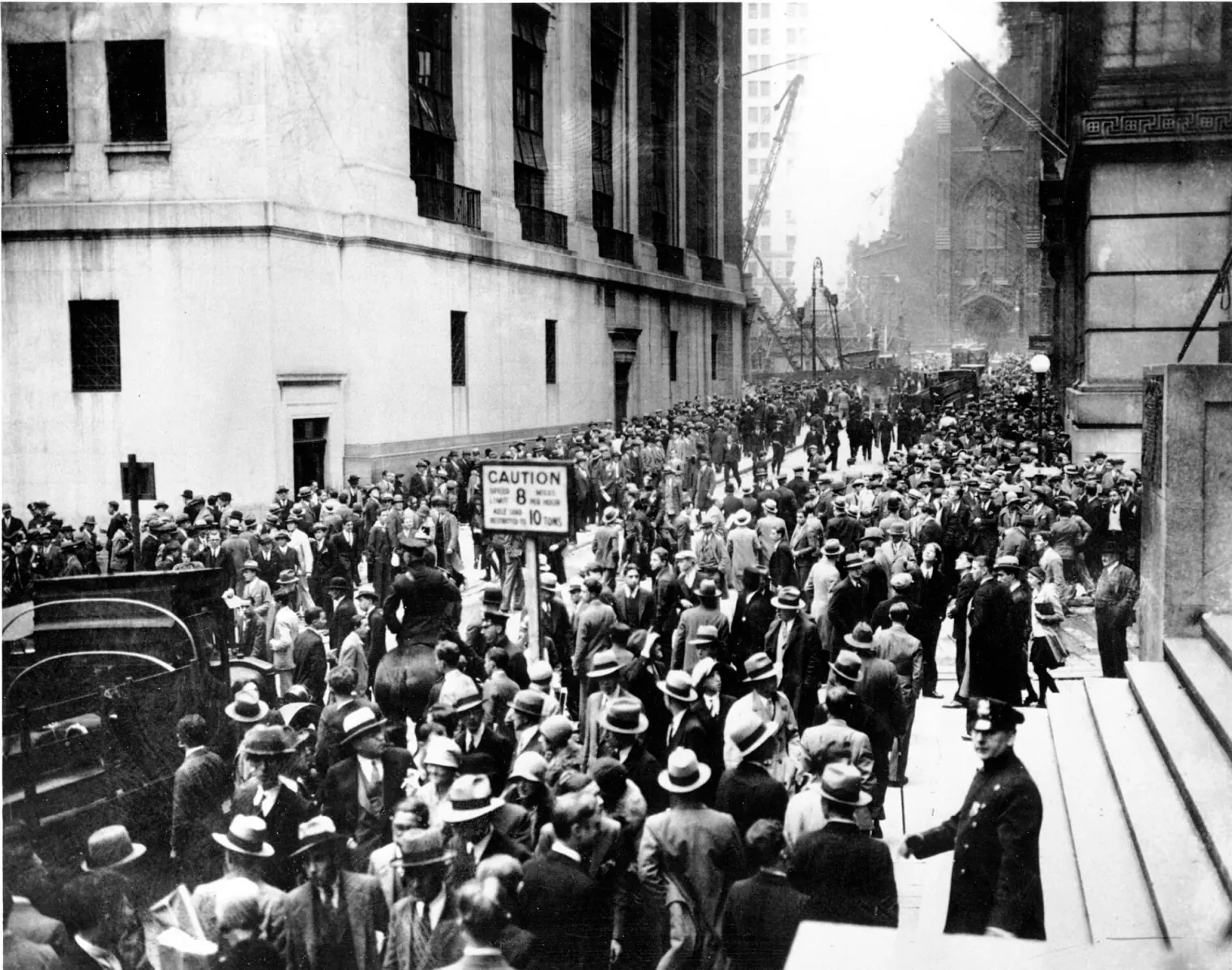
A January 2000 retiree with $2.4 million on the 4% playbook sat at about $1.1 million by age 80, despite perfectly normal average returns after the crash years. Same average, ruinous order. 24/7 Wall St 2026 And the trap aims at you personally: bull markets are what shove portfolios across the line, so "I just hit my number" and "stocks are expensive" tend to arrive in the same envelope. They have rarely been more expensive than now; the market's long-run valuation gauge sits near 40, exceeded in 140 years of data only by December 1999. Shiller CAPE The defenses are dull: hold a couple of years in cash and bonds, skip the inflation raise in crash years (that habit alone lifts 50-year success odds to about 90%), or work one more year. Vanguard 2021
Healthcare is the boss fight
Quit before 65 and you leave employer insurance a decade before Medicare. An unsubsidized couple in their late 50s now pays roughly $31,500 a year in premiums, with a bad-year ceiling above $50,000; the pandemic-era subsidy boosts expired at the end of 2025 and 2026 premiums jumped the most in eight years. KFF 2026 At the 4% rule that premium line is an entire million dollars of portfolio doing nothing but buying insurance. The income-managed subsidy from the tax section softens it. Budget for the ugly version anyway.
The spreadsheet has no cell for your life
Divorce costs the average person 77% of their wealth. Ohio State 2005 A child runs about $311,000 through age 17, college not included. Brookings 2022 More than 1 in 4 of today's 20-year-olds becomes disabled before retirement age. SSA And roughly 4 in 10 retirees left work earlier than planned, mostly health and layoffs, not victory laps. EBRI 2026 The plan quietly assumes a body, a marriage, and an employer that all hold for 25 straight years. Insure what you can, hold the rest loosely.
The odds, stated plainly
Only 13% of American retirees got out before 55, and most of that 13% did not choose the date. EBRI 2026 Most people who start this road step off it: the median saver is on the 60-year plan, and one bad divorce undoes a decade. The road is strange among hard roads, though: you keep every mile you walk. Quit at $300,000 and you still own a machine that pays your rent forever.
You will need something to retire to
The least expected failure mode is winning. The problem moves from money to meaning, and profiles of early retirees who went back to work read identically; "I was bored out of my mind" is a direct quote from one who lasted five months. CNBC 2024 The number buys back your 90,000 hours and then asks, with a straight face, what they were for.
The predators sell this exact dream
"Passive income" is the most profitable phrase in the scam economy precisely because everything above is true enough to believe. The FTC's recent docket: $25 million taken by an "AI-powered" storefront scheme, settlements against course-sellers promising $1,000 to $3,000 a month on autopilot, and MLM plans where, by some analyses, more than 99% of participants lose money. FTC 2024 FTC 2026 Even the famous Einstein line about compound interest is fake; an ad copywriter wrote it. Quote Investigator 2019 The real machine has no webinar, no mentor, and no urgency. If someone is selling you passive income, you are the income.
The Deal Underneath
Where the 7% actually comes from, and why the plan requires you to be worth paying.


Where does the magic return actually come from? Jack Bogle, who invented the index fund in 1976, decomposed a century of stock returns at the end of his life: of the market's 9.6% a year from 1900 to 2005, 9.5 points came from dividends and earnings growth. Real companies, making real things, sold by real employees; speculation contributed 0.1. Vanguard 2026 Morningstar / Bogle So the return you would live on is rent paid on other people's workdays, and the price of admission is decades of your own: produce more than you consume, hand the surplus to the productive world, and the productive world pays you back. That is the whole deal. There is no free lunch in it. There is something better: a fair one, priced in patience, available to people who were never going to be founders or heirs.
A Short History of the Idea
For the record: none of this is new.
A Wall Street analyst named Joe Dominguez retired in 1969, at 31, on $70,000; his 1992 book Your Money or Your Life gave the idea its bones (money is life energy, and enough is a number) PBS, Bengen supplied the 4 percent in 1994, a blog made it a movement in 2011, and the main subreddit now has 2.4 million members trading spreadsheets at all hours. GummySearch 2026 Fifty-seven years of fashion cycles, and the arithmetic has not moved: spend less than you earn, buy the boring thing, wait.
What To Do Monday
The whole guide, reduced to five moves and a closing argument.
- Capture the full 401(k) match this week. Five minutes in an HR portal for a guaranteed 50 to 100% return.
- List every debt by interest rate. Minimums on all, every spare dollar at the highest rate. Anything above 20% is a five-alarm fire.
- Open one total-market index fund and automate a monthly buy, even a small one. The amount matters less than the wiring.
- Raise your income on purpose. Ask, switch employers, apprentice into one of the table's trades, take the license. The raise out-compounds the coupons.
- Check the sliders once a year. Not once a day. The machine runs on decades and ignores weeks.
And if the full 25-year road never gets walked, here is the secret the blunt section was building toward: this is the rare hard road where every mile is paid in advance. A dead credit card is a 22% raise on that money forever. A year of expenses in the bank changes how you talk to your boss. $100,000 invested by 25 grows to roughly $1.5 million by 65 in today's dollars even if you never save another cent. Coast FIRE math Since the 1920s, no one who bought the whole US market and held it 20 years has ever lost money, including the person who bought in 1929. Four Pillar Freedom
Work is 90,000 hours. The threshold is 25 times your spending. Everything else is the climb.